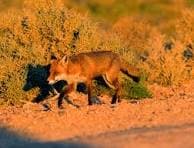
Foxes are everywhere in WA. They kill lambs, wipe out poultry, and hammer native wildlife. For farmers, a quiet bowhunter is a better solution than poison any day.
Nationally, fox predation on lambs costs somewhere between $30 million and $60 million every year. In WA the sheep industry cops it hardest through the Wheatbelt and Great Southern regions. During lambing season a single fox can take multiple lambs in one night. A vixen feeding cubs will kill far more than she needs — surplus killing is well documented.
It’s not just sheep. Poultry operations lose birds constantly. Smallholders with free-range chooks learn the hard way that a fox will clean out a run in one visit. The full picture on fox predation is grim reading — and it doesn’t even cover the damage to native species like numbats, woylies, and ground-nesting birds that foxes have pushed to the edge.
Honestly? Foxes are everywhere. From suburban fringe blocks around Perth out to pastoral stations in the Murchison. But the worst pressure on farming is through the agricultural belt — the Wheatbelt, down through Williams and Narrogin in the Great Southern, and across mixed farming country around the south-west.
The Perth Hills and northern corridor around Gingin have fox issues too, especially on lifestyle blocks with poultry. Even semi-rural properties 20 minutes from the CBD deal with foxes raiding chook pens.
If there are sheep, there are foxes. And where there are foxes, there’s a farmer who’d be keen for some help. Simple as that.
Fox hunting with a bow is a different game to pigs or deer. Foxes are small, fast, and suspicious. You’re typically working at closer ranges — 15 to 25 metres — and the window to draw and shoot is measured in seconds.
Predator calls work brilliantly. A rabbit distress call will bring a fox in from hundreds of metres away if conditions are right. Set up downwind with a clear shooting lane, give it 15-20 minutes per spot. Electronic callers let you place the sound source away from your position, which brings the fox past you rather than straight at you. It’s addictive hunting — some of the women in our crew reckon it’s the most exciting thing they do with a bow.
If you know where foxes are denning or travelling, a simple ground blind near a fence line or gap works well. Foxes are creatures of habit. They use the same trails, the same gaps under fences, the same crossing points. Sit still, stay downwind, and they’ll come.
In WA you can spotlight for foxes on private land with landowner permission. That said, bowhunting under a spotlight is rarely practical — the light itself spooks them and you need both hands on the bow. Most bowhunters stick to daylight hours or the low-light periods of dawn and dusk where you can still see your pins.
This is the bigger picture most people miss. Foxes have been a disaster for Australian native wildlife since they were introduced in the 1850s. In WA they’re a primary reason species like the numbat, woylie, western quoll, and various ground-nesting birds are threatened.
Every fox taken off the landscape helps. That’s true whether you’re doing it for a sheep farmer or for the bush itself. Bowhunters removing foxes on farmland adjacent to nature reserves are doing genuine conservation work. No government grant needed, no committee meetings — just a bloke or a woman with a bow doing something useful.
You set the rules. We make sure they’re followed. That goes for how we treat the land and the native animals on it, not just the landowner’s property.
Fox control is one of the easiest conversations to have with a landowner. Every sheep farmer has a fox problem. Most have tried baiting. Many have given up. Walk up to a Wheatbelt farmer during lambing season and offer quiet, targeted fox control — you’ll get a handshake and directions to the worst paddock.
Check the field guide for the full approach to land access. Foxes are a brilliant way to build a relationship with a farming family — and once you’re on the property, you might find they’ve got rabbits and other pests that need sorting too.
The guide is free. The community is free. Just a bunch of WA bowhunters helping each other out. No gatekeeping, no fees.
regions
The Wheatbelt is fox and rabbit country. Community shoots, farm access, and how bowhunters fit into the picture.
Read moreregions
Feral pigs, foxes and rabbits in the Perth Hills and Avon Valley. Where to look for properties, which Facebook groups to join, and what pests to expect.
Read more
learn
Foxes kill thousands of lambs across WA each year. How the problem affects farmers, and how bowhunters are offering a quiet solution.
Read moreguide
A practical field guide to finding private land access for bowhunting in Western Australia. Where to look, how to approach landowners, and how to keep access long-term.
Read more