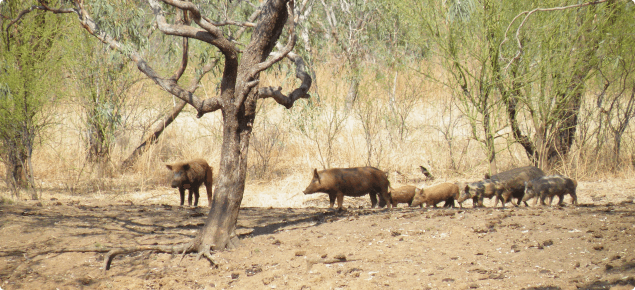
The biggest feral pest in the south-west — and the number-one reason landowners pick up the phone and ask for help. If you want land access in WA, pigs are your golden ticket.
Feral pigs cost Australian agriculture more than $100 million every year. In WA the damage is concentrated in the south-west forests from Harvey down through Collie, Nannup, and the Preston Valley. Tens of thousands of pigs live in those jarrah and marri forests, and they breed like you wouldn’t believe — a sow can drop two litters a year with six or more piglets each time.
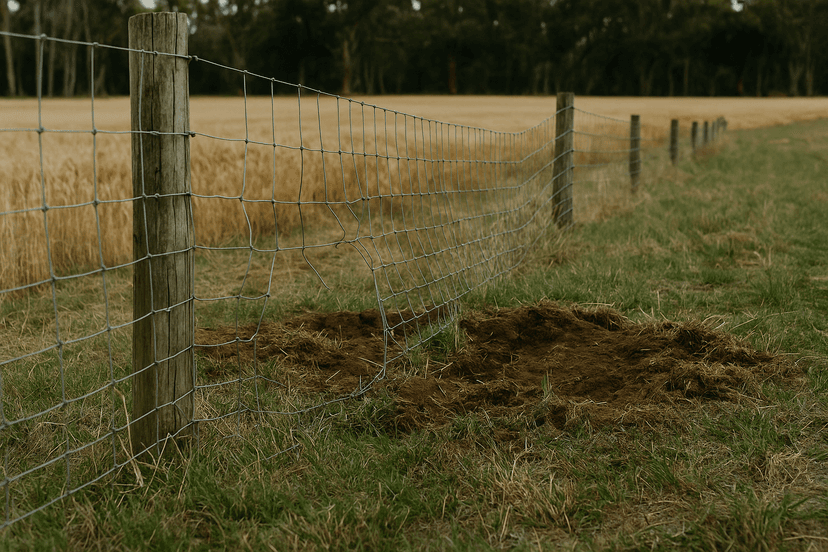
They root up paddocks overnight. They foul dams and waterways with mud and bacteria. They rip through fences like they’re made of paper. Blokes running cattle lose calves to boars. Orchardists around Donnybrook and Balingup find entire rows stripped before sunrise. If you reckon it’s not your problem, talk to any farmer south of Bunbury and they’ll set you straight quick.
The damage pigs cause isn’t just financial. They destroy native vegetation, spread dieback, and compete with native animals for food. They’re a biosecurity risk too — potential carriers of diseases that would gut the pork industry if they ever crossed over.
The heartland is the south-west corridor — roughly from Waroona south through Collie, across to Nannup, and down towards Pemberton. Dense jarrah forest with plenty of water and feed means pig numbers stay high year-round.
The Peel region around Serpentine and Dwellingup has growing numbers. Blokes hunting the Darling Scarp from Mundijong south report regular sign. Further north, pockets around Perth Hills and Avon Valley pop up, though not as consistent.
Look for rooting — fresh turned soil along creek lines, around dams, and in soft ground. Wallows are dead giveaways. Rub trees where pigs coat themselves in mud after a wallow. Once you find sign, set a trail camera and you’ll know within 48 hours what you’re dealing with.
A lot of landowners have tried 1080 baiting. It works on pigs, sure, but it also kills working dogs, poisons water, and leaves carcasses that take out eagles and quolls. Trapping is labour-intensive and most farmers haven’t got the time.
Bowhunters are quiet. No shots echoing across the valley spooking livestock. No secondary poisoning risk. No cost to the landowner — we bring our own gear, our own time, and our own fuel. A keen bowhunter will sit a waterhole from two in the arvo until dark, and the farmer’s cattle won’t even know anyone was there.
Women in the WA bowhunting community are some of the best pig hunters going. A mate of mine — she’s taken more pigs around Nannup than half the blokes I know. Patience matters more than strength, and a well-placed broadhead from 20 metres doesn’t care who’s behind the bow.
That matters to landowners too. You set the rules. We make sure they’re followed. That’s the deal.
Pigs are tough. Their shield — a layer of cartilage and scar tissue over the shoulders — can stop a poorly placed arrow cold. You need to understand anatomy before you draw on a pig.
The money shot is broadside, tight behind the front leg, about a third of the way up the body. You’re aiming for the heart-lung area. On a quartering-away shot you can push the aim point back slightly to angle into the offside lung. Avoid quartering-on shots — the shield is thickest right where you need to penetrate.
Use heavy arrows. A 500-grain minimum is sensible for pigs, and plenty of blokes run 600-plus with a single-bevel broadhead for maximum penetration. If you’re not confident in your setup, check the getting started guide or have a chat with your local ABA branch.
This is where most hunters get stuck. You know pigs are out there, but how do you actually get on a property? The Drawn Bush field guide covers the full process, but here’s the short version.
Start with the farmers’ markets and local ag stores. Collie, Harvey, Nannup — walk in, have a yarn, mention you’re a bowhunter looking to help with pigs. You’d be surprised how often someone says “mate, come talk to my neighbour.” Local Facebook groups for those towns are gold too.
Biosecurity groups and Landcare run community meetings. Show up. Be useful. A couple of our crew — blokes and women both — got their best access through local Landcare chapters. Once a farmer sees you’re ethical, insured through the ABA, and genuinely there to help, doors open fast.
The land access guide breaks down how to approach landowners properly. Get that right and you’ll never be short of places to hunt.
The guide is free. The community is free. Just a bunch of WA bowhunters helping each other out. No gatekeeping, no fees.
regions
The motherlode for WA bowhunters. Tens of thousands of feral pigs, breeding deer populations, and landowners who need help.
Read moreregions
The Peel region has significant feral pig and deer populations in the jarrah forests. Land access opportunities for bowhunters.
Read morelearn
Feral pigs cost WA farmers millions in crop damage, fence destruction and water contamination. The numbers and what’s being done.
Read moreguide
A practical field guide to finding private land access for bowhunting in Western Australia. Where to look, how to approach landowners, and how to keep access long-term.
Read more