Feral Goat Hunting in Western Australia

Rangeland wreckers. Feral goats strip native vegetation, compete with livestock, and cause erosion across WA’s pastoral zones. They’re tough, they’re smart, and they’re a cracking bowhunting challenge.

Feral goats have been in Australia since the First Fleet. In WA they’re spread through the pastoral zones and some south-west pockets, with an estimated national population north of 2 million. They’re declared pests in most areas and landowners are keen for any help keeping numbers down.

The Damage Feral Goats Cause

Goats eat everything. That’s not an exaggeration. Native shrubs, pasture, tree seedlings, bark — they’ll browse a paddock down to bare soil and then start on the fence posts. In pastoral country they compete directly with sheep and cattle for feed, costing station operators real money in lost carrying capacity.

The environmental damage is just as bad. Goats prevent native vegetation regeneration, cause soil erosion through overgrazing, and damage waterhole margins. In rocky range country they accelerate gully formation that takes decades to recover. Conservation efforts in arid and semi-arid WA are constantly undermined by feral goat pressure.

They also damage infrastructure. Fences, water troughs, windmill fittings — goats wreck it if they can reach it. Mustering goats out of an area is expensive and temporary. Within months they drift back from adjacent bush and you’re back to square one. Ongoing pressure from hunters is one of the few things that makes a lasting dent.

Where to Find Feral Goats in WA

The biggest populations are in the pastoral zones — Murchison, Gascoyne, and the Goldfields. Rocky breakaway country with scattered water points is classic goat habitat. Station owners in those areas often welcome hunters because mustering is impractical across big leases.

Closer to the agricultural belt, there are pockets in the eastern Wheatbelt and through the transition zone where farming country meets rangeland. Some south-west properties have small feral goat populations too — usually descendants of escaped domestic stock that have gone bush over the years.

The further out you go, the bigger the mobs. If you’re keen to travel, a trip to the mid-west or Goldfields can put you in front of serious numbers. Pack water, pack fuel, and let someone know where you’re headed. Remote country is no place to cut corners on preparation.

How to Bowhunt Feral Goats

Spot and Stalk

This is the classic approach. Glass from high ground in the early morning, pick a mob, plan your approach using terrain and wind. Goats have decent eyesight and a good nose, but they’re not as spooky as deer. If you stay downwind and use the rocky landscape to break your outline, you can get within 20-30 metres consistently.

In pastoral country the terrain works for you. Breakaways, creek lines, and boulder fields give you cover to close distance. Just watch where you put your feet — a kicked rock will scatter a mob in seconds. Patience and good boots are your two best pieces of gear.

Waterhole Ambush

In dry country, water is everything. Goats need to drink regularly and they’ll come to the same water points daily. Set up a ground blind within bow range of a dam or trough and wait. Mid-morning and late afternoon are peak drinking times. A patient hunter — bloke or woman — can take multiple goats from one spot over a couple of days.

This approach works well on stations where the station owner can point you to the worst-hit water points. Set up a trail camera first to confirm numbers and timing. Then sit, wait, and let them come to you.

Shot Placement

Goats are mid-sized game. A broadside shot behind the front leg into the heart-lung area is the standard. They’re not as tough as pigs — no shield to worry about — but a well-placed shot still matters. Aim for clean, quick kills. That’s the ethical standard and it’s non-negotiable.
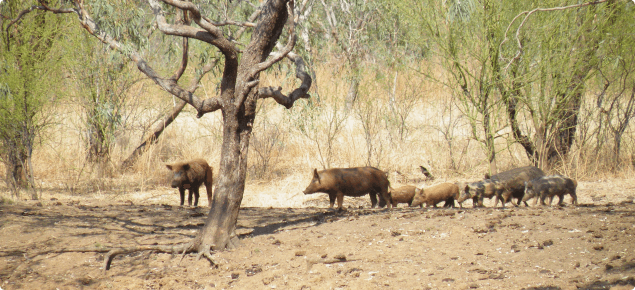
Getting Access to Goat Country

Pastoral station access is a different game to approaching a farmer in the south-west. Stations are big — hundreds of thousands of hectares sometimes — and the people running them are busy. The field guide covers the general principles, but for station country you need to be particularly self-sufficient.

Ring ahead. Don’t just rock up. Station managers appreciate someone who calls first, explains who they are, and asks what they need. Mention your ABA membership and insurance. Offer to provide trail camera data or a tally of what you take. Be professional and you’ll get invited back.

You set the rules. We make sure they’re followed. On a pastoral station that means sticking to agreed areas, closing gates, staying clear of stock, and reporting back when you’re done. Get that right and you’ve got yourself a hunting property for years.

Conservation Through Hunting

Feral goat control is genuine conservation work. Every goat removed reduces browse pressure on native vegetation, gives seedlings a chance to establish, and takes pressure off water sources that native animals depend on. In arid WA where every drop counts, that matters enormously.

Government programs run aerial culls and muster operations, but they’re expensive and infrequent. Bowhunters providing ongoing, consistent pressure fill the gaps between those big operations. A few keen hunters visiting a station through the year keep numbers suppressed in a way that a single aerial cull every three years simply can’t.

It’s pest control with purpose. You’re helping a landowner, you’re helping the bush, and you get a challenging day of hunting into the bargain. Hard to beat that. Check the land access guide and start making calls.

Ready to find your own land access?

The guide is free. The community is free. Just a bunch of WA bowhunters helping each other out. No gatekeeping, no fees.

Keep reading